Updated: September 2026
When people hear the term “blockchain certificate,” they often think it is a complicated technology reserved for developers or large companies. In reality, a blockchain certificate is a simple concept: it is a digital certificate whose important information is recorded and verified using blockchain technology.
Traditional certificates usually depend on a company database, a PDF file, or a physical document. The problem is that these certificates can be lost, copied, modified, or difficult to verify. A blockchain certificate creates a more transparent way to prove that a certificate was issued and that its information has not been secretly changed.
What Is a Blockchain Certificate?
A blockchain certificate is a digital record stored with blockchain technology that provides proof of information such as authenticity, ownership, origin, or issuance.
Instead of relying only on a private database, the certificate information is connected to a blockchain record. This allows different parties to verify the certificate independently.
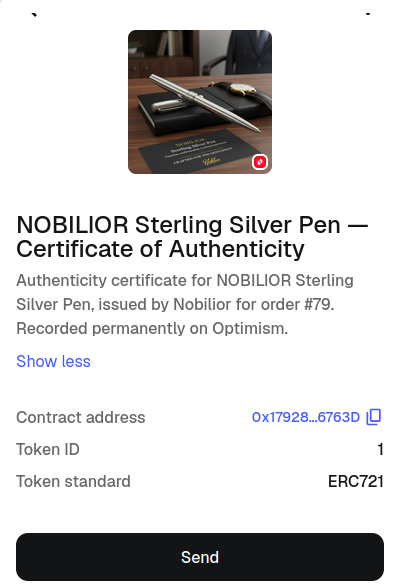
For example, a luxury product brand can issue a blockchain certificate for a limited-edition watch. The customer can later verify that the certificate was created by the brand and that the product information matches the original record.
How Does a Blockchain Certificate Work?
The process is usually straightforward:
- A company creates a digital certificate containing relevant information.
- The certificate data is recorded through a blockchain transaction.
- The certificate receives a unique blockchain-based reference.
- Customers or third parties can verify the certificate whenever needed.
The blockchain does not replace the responsibility of the issuer. Instead, it provides a reliable way to record and verify the information provided by the issuer.
Why Are Businesses Using Blockchain Certificates?
Businesses are increasingly looking for ways to build customer trust. A normal certificate can show information, but customers often have no easy way to know whether it is genuine.
Blockchain certificates can help businesses provide:
Better product authenticity
For products where authenticity matters, such as collectibles, luxury goods, artwork, and limited editions, a blockchain certificate can provide customers with a verifiable ownership record.
Stronger customer confidence
Customers increasingly want transparency before making a purchase. A verifiable certificate can become an additional trust signal.
Easier verification
Instead of contacting a company and waiting for confirmation, customers can check certificate information through a verification system.
A digital product history
A blockchain certificate can help create a long-term record connected to a product, which can be valuable when ownership changes in the future.
Blockchain Certificates for WooCommerce Stores
Online stores selling valuable or unique products can use blockchain certificates to provide customers with an additional layer of trust.
With WooChainPro, WooCommerce merchants can issue blockchain-based authenticity certificates for products and orders without building their own blockchain infrastructure.
The store installs the plugin, configures the certificate settings, and WooChainPro manages the blockchain process behind the scenes.
WCP Blockchain Authenticity Certificates empowered by one click easy setup which do not requires blockchain expertise.
This allows merchants selling premium products, collectibles, limited editions, and other valuable items to offer customers a verifiable digital certificate connected to their purchase.
Are Blockchain Certificates Only for Luxury Products?
No. Blockchain certificates can be used anywhere proof and verification are important.
Possible applications include:
- Collectible products
- Artwork
- Certificates of ownership
- Premium handmade products
- Digital and physical product verification
- Limited-edition releases
- Brand authenticity programs
As customers become more concerned about counterfeit products and transparency, digital verification systems are becoming more valuable.
| Who Uses Blockchain Certificates? | How They Use Them | Example |
|---|---|---|
| Luxury brands | Provide proof of authenticity for high-value products. | A watch brand issues a certificate connected to each limited-edition watch. |
| WooCommerce stores | Give customers a verifiable record connected to their purchase. | An online store issues a blockchain certificate after a customer buys a premium product. |
| Collectors and creators | Prove ownership and product history. | An artist provides a certificate showing the origin of an artwork. |
| Manufacturers | Track product information and strengthen brand trust. | A producer records authenticity information for special product releases. |
| Premium handmade businesses | Add transparency and value to unique products. | A craftsman provides a certificate for a one-of-a-kind handmade item. |
- Blockchain certificates are useful for any business where authenticity and trust matter. Luxury brands, WooCommerce stores, collectors, artists, manufacturers, and premium product sellers can use them to provide customers with a verifiable digital record connected to a product or purchase.
The Future of Digital Certificates
Certificates have existed for centuries, but the way we verify them is changing.
A blockchain certificate combines the familiar idea of a certificate with modern verification technology. Instead of relying only on trust, businesses can provide customers with a way to independently check important records.
For online stores, this creates an opportunity to turn a simple purchase into a stronger ownership experience.
WooChainPro helps WooCommerce stores introduce blockchain certificates in a simple way, allowing merchants to focus on their products while the technology handles the verification process.
More: best blockchain plugins
This article is periodically reviewed and updated as blockchain certificate technology, business applications, and best practices continue to develop. Our goal is to provide the most current and practical information for businesses interested in improving product authenticity, verification, and customer trust.
Logo

SSL

